
Most marketing managers begin their week with a clear strategic plan, only to find themselves derailed by a “quick question” on Slack or an “urgent” request for a social media graphic. By Tuesday afternoon, the high-level strategy is buried under a pile of tactical fires.
This cycle of reactive firefighting is the primary reason why marketing often feels like a cost center rather than a growth engine. When you are constantly reacting, you are not leading. You are merely surviving.
This AI-generated episode of the Powerful Marketing Tips podcast is the third in the series, focusing on exploring the core concepts of chapter 3 of The Greatest Marketer.
We shift from the boardroom strategy discussed in previous chapters to the reality of daily execution. Tactical marketing is where the strategy meets the customer, and if the execution is chaotic, the strategy will fail.
Table of Contents
The cost of the three-minute interruption
Remember the character Marge? She is a talented marketing manager who arrives at the office ready to tackle a major campaign analysis.
Within ten minutes, a salesperson asks for a minor edit on a slide deck. Then, an “urgent” email arrives regarding a typo on a website from three years ago. By the time Marge looks at the clock, it is 4:00 PM, and the campaign analysis remains untouched.
This leads to a productivity crisis. Research indicates that it takes an average of 23 minutes and 15 seconds to return to the original task after an interruption. If you are interrupted four times in a morning, you have effectively lost your entire capacity for deep, strategic work.
To escape this trap, marketing must be viewed as a professional discipline with boundaries, not a “drive-through window” where internal stakeholders can place orders for immediate pickup.
Protecting your focus with the MIP time
If you do not schedule your priorities, other people will schedule their priorities for you. One of the most effective tactical tools mentioned in The Greatest Marketer is the concept of MIP (Most Important Person) time.
MIP time is a non-negotiable block of 60 to 90 minutes each day dedicated to deep work. This is the time when you focus on the “first button” of your strategy—those tasks that, if done correctly, make everything else easier.
During MIP time, notifications are off, emails are closed, and “quick questions” are deferred. By defending this hour ruthlessly, you ensure that even on your most chaotic days, the needle has moved forward on at least one strategic priority.
The Work Smarter Flywheel
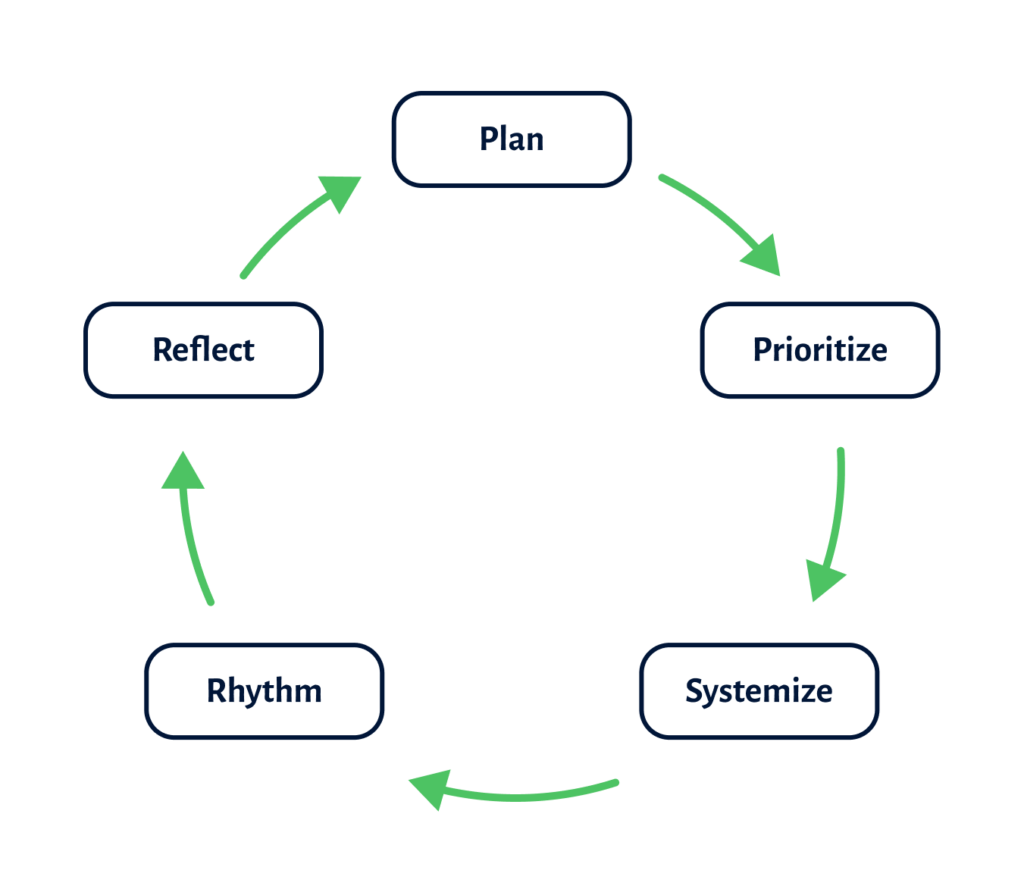
True efficiency is about doing the right things systematically. The Work Smarter Flywheel provides a five-part framework for managing daily execution:
- Prioritize: Use the Eisenhower Matrix (importance vs urgency) to distinguish between high-impact work and low-value “busywork.”
- Plan: Establish a rhythm of annual, monthly, weekly, and daily planning. If a task is not on the calendar, it does not exist.
- Systemize: Create Standard Operating Procedures (SOPs) for recurring tasks. If you have to do something more than twice, it needs a system.
- Establish Rhythm: Consistency is built through reliability. Develop a cadence for meetings, content publishing, and reporting.
- Reflect: Spend time analyzing the data. If a tactic is not working, adjust the recipe rather than simply working harder at a failing method.
Managing internal chaos with a marketing SLA
One of the biggest sources of “firefighting” is the lack of clear boundaries for internal requests. To solve this, marketing departments should implement an internal Service Level Agreement (SLA).
An SLA defines the rules of engagement for the rest of the company. It might specify that:
- Social media requests require five business days of lead time.
- New campaign ideas must be submitted via a specific form with a clear goal.
- “Urgent” requests must be approved by a director to ensure they align with current priorities.
When you have a formal SLA, you move from being reactive to being proactive. You are no longer “fitting in” work: you are managing a professional pipeline.
This protects the team from burnout and ensures that marketing resources are allocated to tasks that actually deliver business growth.
Also learn: How to Start a Career in Marketing (Without Losing Your Mind)
The Content Flow Framework
Content creation is often the most exhausting part of a marketer’s tactical life. Many teams feel like they are on a treadmill, constantly trying to create new “hooks” for every platform.
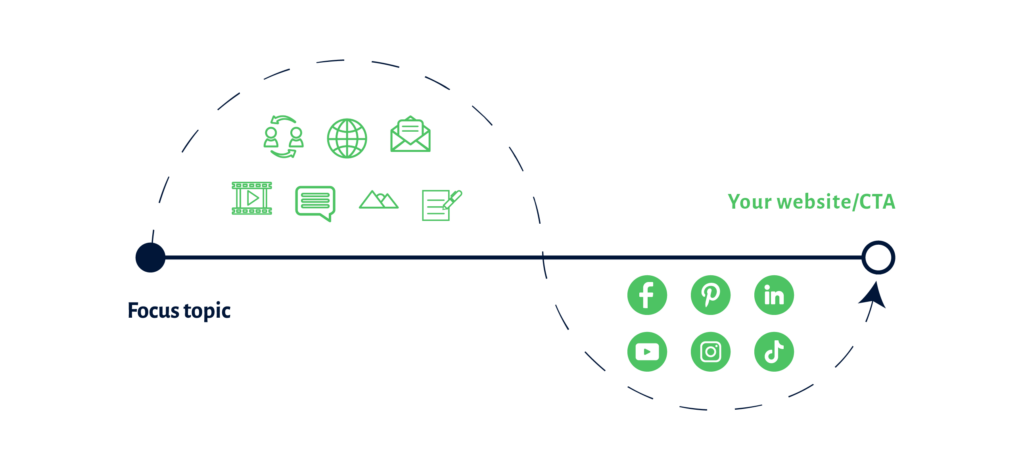
The Content Flow Framework suggests a more efficient approach: “Cook the turkey once, then make the soup.”
The “turkey” is your core, high-value asset (for example, a whitepaper, a long-form podcast, or a comprehensive guide). Once that core asset is created, you “make the soup” by repurposing it into:
- blog posts
- LinkedIn snippets
- short-form videos
- email newsletters
This method ensures that your tactical output is high-volume and consistent without requiring you to reinvent the wheel every Tuesday morning. It allows for deep thinking at the start of the process, which then fuels weeks of execution.
Reclaiming your calendar
When you stop firefighting, you create space for the strategic thinking that actually builds long-term authority and trust. Take a look at your calendar.
Are the tasks occupying your time moving the needle for the business, or are you simply running fast on a hamster wheel? You do not rise to the level of your goals: you fall to the level of your systems.
Build smarter marketing workflows with the Powerful Marketers Hub
Moving from reactive tasks to proactive leadership is difficult to do in a vacuum. The Powerful Marketers Hub is designed to provide the frameworks, templates, and community support needed to streamline your execution and protect your strategic focus.
As a listener of the podcast, you can use the code PODCAST to receive your first month of premium membership for free.
Inside, you will find tactical spaces for systems, AI, and content planning, along with a global network of marketing professionals who are building more efficient businesses together.
Join the Powerful Marketers Hub here
Watch the Episode on YouTube
FAQs
What is “daily marketing firefighting”?
Daily marketing firefighting is when marketers spend most of their time reacting to last‑minute requests, “urgent” fixes, and ad‑hoc tasks instead of working on strategic priorities. It creates constant stress and makes marketing feel like a cost center rather than a growth driver.
Why is constant firefighting so damaging for marketers?
Frequent interruptions destroy deep focus, delay important projects, and lead to burnout. When you are always reacting, you cannot properly analyze, plan, or execute campaigns that move long‑term business results.
What is MIP time, and how do I use it?
MIP (Most Important Person) time is a daily 60–90-minute, non‑negotiable block dedicated to deep, strategic work. During this time, notifications are off, email is closed, and you focus only on the tasks that most directly move your key marketing goals forward.
How does the Work Smarter Flywheel help my daily marketing work?
The Work Smarter Flywheel gives you a simple system: prioritize what matters, plan it into your calendar, systemize recurring tasks, establish rhythms for execution, and regularly reflect on results. This keeps you out of chaos and ensures that your daily actions support your strategy.
What is a marketing SLA, and why do I need one?
A marketing Service Level Agreement (SLA) sets clear rules for internal requests, such as required lead times and how to submit new ideas. It reduces random “drive‑through” requests, protects your team’s time, and ensures that marketing resources are used on the most impactful work.
What is the Content Flow Framework?
The Content Flow Framework is a way to create content more efficiently by first producing one core asset (the “turkey”), such as a whitepaper or long podcast, and then repurposing it into multiple pieces like blog posts, LinkedIn updates, short videos, and email campaigns.
How does the Content Flow Framework reduce burnout?
By “cooking the turkey once and making the soup many times,” you avoid constantly starting from scratch. One deep, strategic piece of content can fuel weeks of tactical execution, reducing pressure while keeping your channels active.
What is the Powerful Marketers Hub, and how can it help me?
The Powerful Marketers Hub is a community and resource platform that offers frameworks, templates, and support to help you build better marketing systems. It provides tactical spaces for processes, AI, and content planning so you can move from reactive firefighting to proactive leadership.
